





Running a website these days is not practical without an SSL Certificate. By 2026, HTTPS is expected on any site that deals with logins, forms, customer data, payments, or other types of browser-to-server traffic. You will still hear the term "SSL certificate" used for the digital credential that enables an HTTPS connection, even though modern sites are in fact running on TLS rather than the older SSL protocols.
What Does an SSL Certificate Do?
SSL certificate allows a browser to establish a trusted TLS connection to a web server. The certificate authenticates the server during the handshake and provides the public-key data needed for secure communication. After that, session keys are established to encrypt data moving between the visitor and the server.
This can protect information such as:
- Login credentials
- Contact form submissions
- Session cookies
- Customer information
- API requests
- Payment-related communication
But it is important to understand that an SSL Certificate is not a complete solution for website security. It is the foundation for protecting data in transit; the server, the database, the application, and user accounts must be secured separately. A valid certificate will do nothing to stop an attacker from stealing an administrator's password or exploiting weak software. For those threats, you need firewalls, strong authentication, access restrictions, and regular updates.
Why SSL Is More Important in 2026
The scope of HTTPS has expanded with modern websites. A typical website will communicate with analytics systems, third-party apps, customer portals, and payment platforms. All of that network traffic involves information that needs protection.
Then there is the matter of SSL certificate management, which is becoming more demanding. Under the rules of the CA/Browser Forum, a publicly trusted TLS subscriber certificate issued after March 15, 2026, will have a maximum life of 200 days. From 2027, it drops to 100 days, and by 2029, it is 47. As a result, renewal and deployment must be automated. An individual owner might find this straightforward enough, but for a company with numerous domains and servers, it is an infrastructure issue.
HTTPS Protects Data in Transit
Take a customer who logs in: the username, password, and session data are sent between two endpoints. TLS ensures that this information is not readable to anyone monitoring the network. The same applies to an ordinary site where a visitor enters a name or phone number, even if no money is changing hands. Interception is a risk that HTTPS mitigates, so it is relevant well beyond eCommerce.
Authentication and Encryption
Encryption is only half the story. The browser has to verify that it is connecting to the correct website and not an imposter. The certificate is part of the public-key infrastructure that verifies that identity.
The browser will look at the domain name, the validity period, and the chain of trust. If it finds anything wrong, an expired or revoked certificate, for instance, it will display a warning rather than trust the connection. Accuracy counts; the certificate must be for the right domain and configured properly.
What If a Certificate Runs Out?
It can cause operational problems. The application may be fine, but an expired TLS cert will trigger a warning in the visitor's browser, and they may be unable to continue. For an online business, that means failed logins and reduced confidence. Website owners should monitor their inventory of active certificates and let automation handle the rest, especially given the 200-day limit now in effect for new issues.
Is a Paid Certificate Necessary?
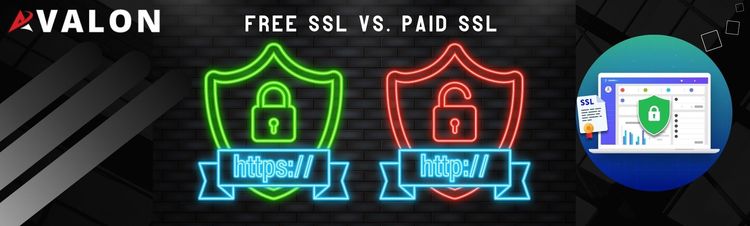
Not necessarily. While every site needs properly configured HTTPS, a commercial product is not always necessary. A free SSL will suffice for a blog, portfolio, or simple business site if standard TLS and domain validation are all that is required. There is little technical advantage to paying for more in such cases.
A certificate is worth paying for when the organization wants warranty coverage, dedicated support, or validation. But do not mistake the price tag for stronger encryption.
For an eCommerce site, HTTPS should be used from start to finish, particularly at checkout and wherever account access is involved. There is a tendency to confuse an SSL Certificate with payment security, but they are not the same thing.
While TLS does protect communication between the server and the browser, it will not shield a business from fraudulent activity, secure vulnerable application code, or protect a compromised administrator account. For an online store, protection must come in layers. In addition to TLS, one should have firewall controls, database security, strong authentication, and software updates in place. The certificate is only one element of this architecture.
SSL Certificate and Modern Web Applications
Today's websites are applications first and static pages second. A typical business site will have a frontend, a backend API, an admin portal, third-party integrations, and a database. These pieces may communicate with one another over separate connections, and those need to be safeguarded. It is even more critical when customer data, session cookies, or authentication tokens are in transit between services.
TLS is the encrypted transport layer for such exchanges. Without it, even an application with robust access controls can leave sensitive information exposed. As a result, infrastructure teams and developers should view HTTPS as integral to the deployment architecture, not something added at the end of development.
SSL Security Depends on Correct Server Configuration
An insecure server is not fixed by a certificate. The web server has to be configured with the right cryptographic settings and TLS versions. Private keys require particular care, since if they fall into the wrong hands, the certificate becomes useless.
The server environment as a whole is also a factor. One needs to look at operating system updates, patching, backups, malware protection, and access rules. A TLS certificate is meant to fit within that wider framework. Some businesses find managed hosting a sensible way to avoid overseeing every aspect of the infrastructure.
SSL Certificate Management Is Now an Operational Task
Gone are the days when a company could install a certificate and not think about it again. With certificate lifetimes shortening, that is no longer a workable strategy. By 2026, the maximum validity will be 200 days, dropping to 100 in 2027 and 47 by 2029. Automation is essential to keep up.
A sound process will cover everything from inventory and expiry monitoring to automated renewal and private-key protection, as well as alerts for any failures. For those running several sites, such controls prevent outages that would otherwise be entirely preventable.
Why Every Business Website Needs SSL in 2026
HTTPS has moved beyond being a technical feature. Whether it is an employee logging into a portal or a customer making a purchase, there is an expectation of a secure connection. And as applications rely more on encrypted APIs, the need is clear.
An SSL Certificate provides the necessary trust and encryption. But its value is in the implementation: it has to be valid, monitored and renewed, and the application behind it properly secured. That is what makes SSL essential in 2026: it enables secure communication for modern web applications.
Choose the Right SSL and Hosting Environment
Whether a business is small or large is less relevant than what the website needs. A straightforward site might work with standard HTTPS and some reliable automation, whereas a more complex operation could require commercial support or special validation.
SSL has to work alongside DNS, the firewall, and the web server. At Avalon, we offer managed hosting that includes free SSL, DDoS and firewall protection, daily backups, and round-the-clock technical support. Our aim with Avalon Hosting Services is to ensure that the HTTPS connection is not just installed but remains correctly configured for the life of the site.
FAQs
Is an SSL Certificate necessary in 2026?
It is. Any site dealing with payments, forms, logins, or application data requires HTTPS as standard.
Does an SSL Certificate prevent hacking?
No. TLS is for data in transit. It offers no defense against SQL injection, malware, stolen credentials, or weak plugins.
Is a free SSL certificate secure?
Provided it is issued and configured correctly, a free certificate provides the same TLS encryption as a paid one. The cost is for the additional services.
Does SSL improve website trust?
HTTPS establishes an encrypted, trusted connection and prevents the type of browser warnings that can reduce confidence.
Do eCommerce websites need SSL?
They certainly should. HTTPS is required to secure the connection between the customer and the site, alongside other payment and application safeguards.
Check the environment
Confirm DNS, hosting, control panel, and certificate settings before applying article recommendations to a live site.
Document the change
Keep renewal dates, redirects, and security settings visible for the team that maintains the website after launch.